

The information below seeks to combat common misconceptions and provide patients with a basic understanding of options for fistula treatment.
For patients with an anal fistula, it is important to see a specialist. A colorectal surgeon or general surgeon experienced in fistula treatment will provide guidance on the best procedure for your specific fistula anatomy.
Seton Placement
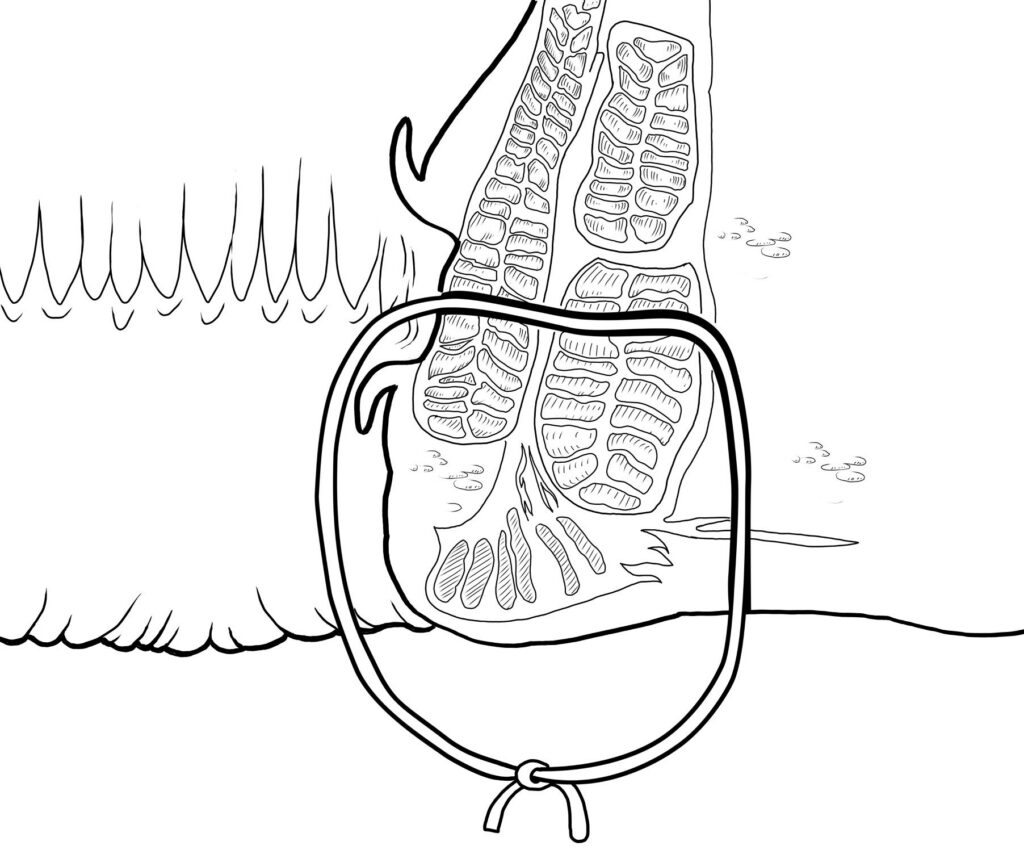
Once a patient is diagnosed with an anal fistula, a draining seton is usually put in as a first step, before definitive surgery. The seton, which is a soft flexible string, often made of silicone, helps initial scar tissue to form, reduces inflammation, removes tissue impeding healing, and allows any small infected areas to be drained. Surgeons often use a seton as a first step so that the fistula tract is clearly identified and controlled and can be kept open, allowing infected fluid to drain prior to definitive surgery.
Current Surgical Options:
Fistulotomy
In this procedure, the surgeon cuts the fistula tract open, exposing the tract to the open air for the entire length of fistula and allowing it to scar like a skinned knee would heal. While this is a technically straight-forward procedure, it requires dividing some sphincter muscle and is not suitable for many complex fistulas because of incontinence risk. The reported success rate of this procedure ranges from 52%-70%.1
LIFT (Ligation of the Intersphincteric Fistula Tract)
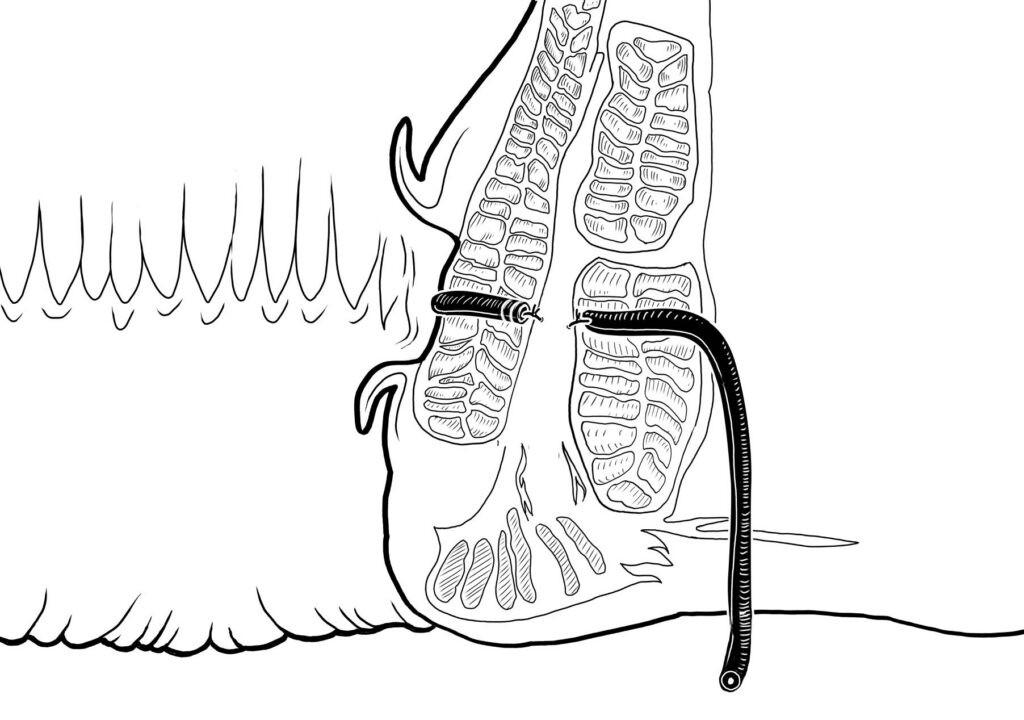
In this type of surgery, the surgeon approaches the fistula between the internal and external sphincters. The fistula tract is identified in this space and is simply divided followed by suture closure of the cut ends of the fistula tract. Success rates reported in the literature range from 30-70%.2
Endoanal Flap
In this procedure, a flap comprised by a portion of the internal anal sphincter and the overlying anal skin is pulled down over the fistula tract at its origin in the internal anal sphincter muscle. The internal opening is closed with a flap of rectal lining and underlying tissue. Success rates reported in the literature range from 54%-66%.3
Cutting Seton
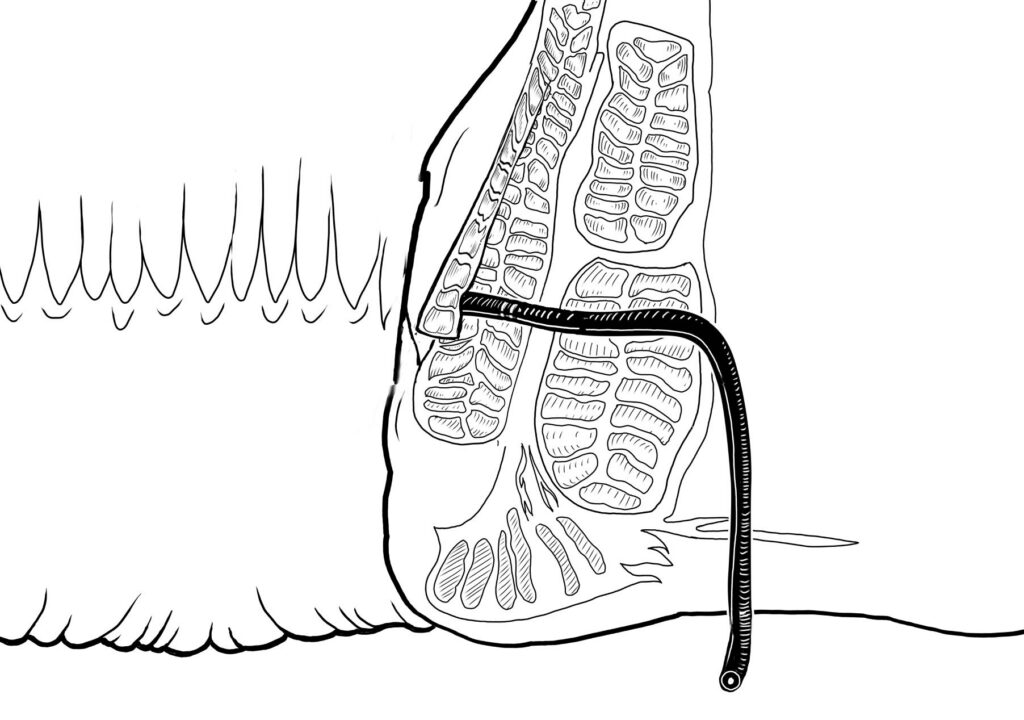
With this procedure, the seton is gradually tightened to slowly strangulate and divide the sphincter muscle in hopes that the fistula will scar closed as the cutting proceeds. This procedure has similar risks of incontinence as fistulotomy and is usually reserved for lower, less complex fistulas.
Plugs
In a plug procedure, a biologic plug (often collagen-based) is inserted into the tract. Plugs are less common today than they once were, most certainly due to the low success rates, which range from 34%-62%4 in the literature.
Fistulectomy
A fistulectomy involves completely excising, or cutting out, the entire fistula tract. This procedure is much less common today than in the past, because it creates a large wound that takes longer to heal, and can result in incontinence, with outcomes similar to fistulotomy.
BioHealx®
The BioHealx device is a small bioabsorbable implant placed around the outside of the fistula tract where it passes through the sphincter muscle. Rather than cutting the tract open or dividing the muscle, the implant draws the tissue edges together so the tract can close and heal, leaving the sphincter intact. This approach is intended to lower the incontinence risk associated with cutting procedures. In the first published clinical study of the technique, the technique achieved an 84.4% success rate, with 96.8% of patients experiencing stable or improved continence.5 Full study-comparison data are summarized further on our Clinical Data page.
References
- Sørensen KM, et al. Surg Endosc. 2025 Mar;39(3):2073-2079.
Aguilar-Martínez MDM, et al. Dis Colon Rectum. 2021 Nov 1;64(11):1374-1384. - Madbouly KM, Emile SH, Issa YA, Omar W. Surgery. 2021 Jul;170(1):61-66.
Madbouly KM, El Shazly W, Abbas KS, Hussein AM. Dis Colon Rectum. 2014 Oct;57(10):1202-1208.
Wallin UG, Mellgren AF, Madoff RD, Goldberg SM. Dis Colon Rectum. 2012 Nov;55(11):1173-8.
Malakorn S, Sammour T, Khomvilai S, Chowchankit I, et al. Dis Colon Rectum. 2017 Oct;60(10):1065-1070.
Erguder et al. Colorectal Disease. 2025;27:e70199. - Madbouly KM, El Shazly W, Abbas KS, Hussein AM. Dis Colon Rectum 2014;57:1202–1208.
Schwandner T, Thieme A, Scherer R, et al. Int J Surg Open. 2018;15:25–31.
Seifarth et al. BMC Surg (2021) 21:283. - Bondi J, Avdagic J, Karlbom U, Hallböök O, Kalman D, Šaltytė Benth J, Naimy N, Øresland T.. Br J Surg. 2017 Aug;104(9):1160-1166. , Jun;96(6):608-12.
Han JG, Wang ZJ, Zhao BC, Zheng Y, Zhao B, Yi BQ, Yang XQ. . Dis Colon Rectum. 2011 Nov;54(11):1412-8.
Schwandner T, Roblick MH, Kierer W, Brom A, Padberg W, Hirschburger M. Dis Colon Rectum. 2009 Sep;52(9):1578-83. - Harsányi L, et al. Int J Colorectal Dis. 2025 May 6;40(1):110.